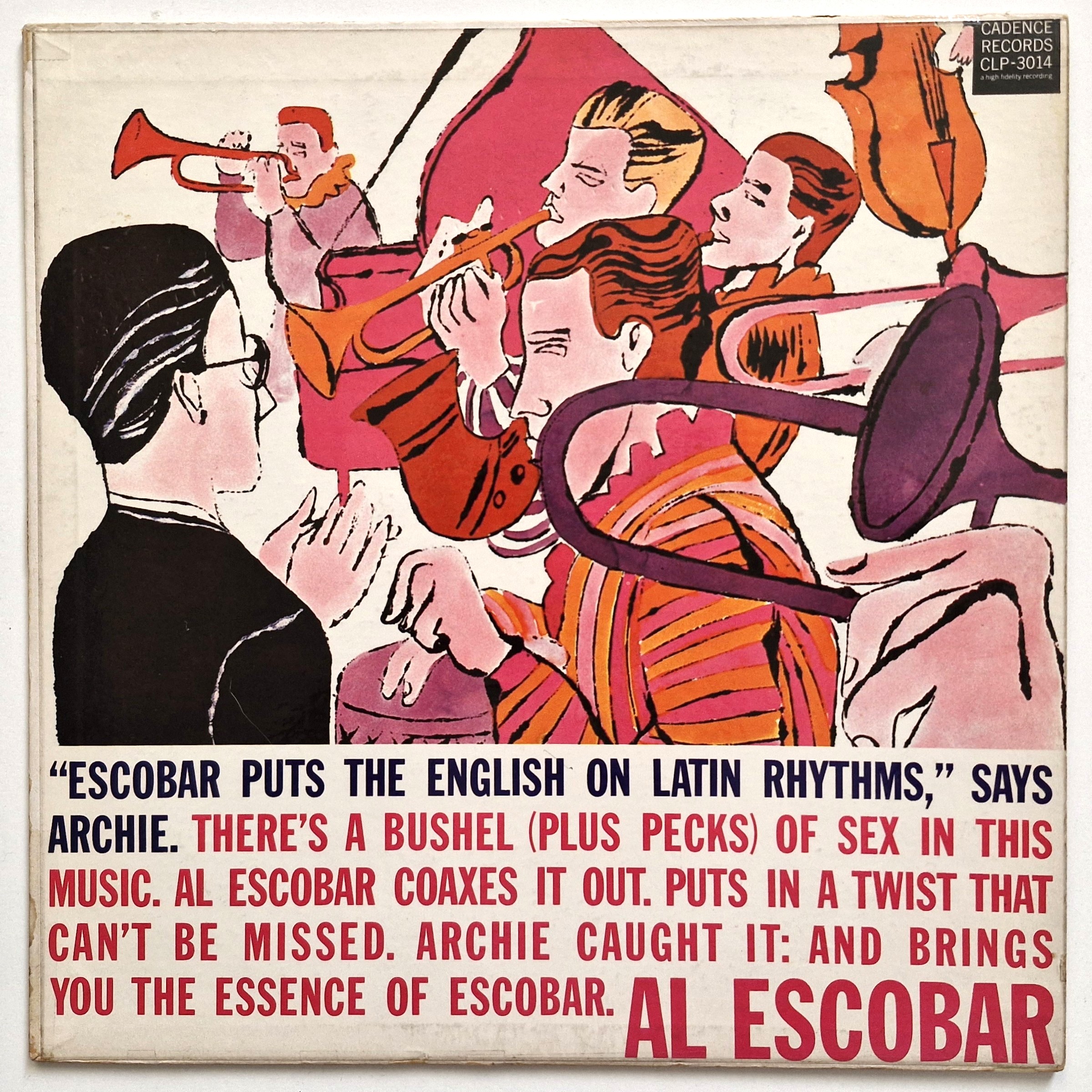
Art critic and Warhol biographer Blake Gopnik kindly wrote about my discovery of the hitherto unknown Warhol cover art for the album Al Escobar (Cadence Records, CLP-3014, 1958) on his website Warholiana.com. “To prove it’s by Warhol (he was working in a shared style), Minnebach can cite several known drawings that pretty clearly relate to the cover”, Gopnik wrote. Indeed, seeing the album cover immediately made me think of two drawings I had seen before, that without any doubt are different versions made for the exact same commission.
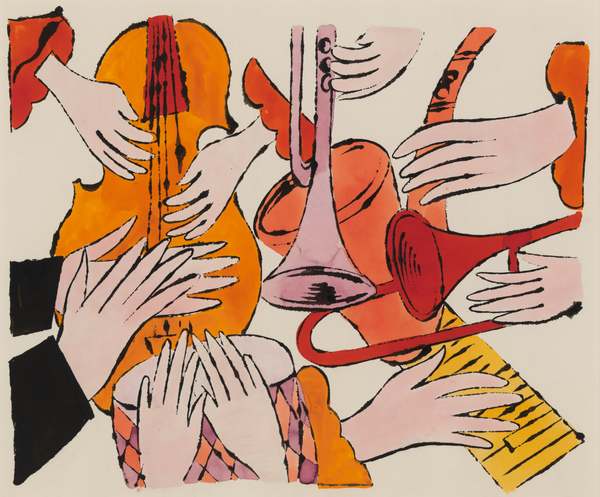
First one is a drawing in the collection of the National Galleries of Scotland and Tate. It is titled Instruments with Hands, and shows exactly that: musical instruments of a latin jazz combo, and the hands of its players, their arms in festive sleeves. On the album cover Al Escobar, the musicians are shown in full. The colours of dye used in both drawings are identical.
As I wrote in my previous post, on the album cover of Al Escobar, the man on the left in black suit and wearing glasses is a portrait of record label owner Archie Bleyer, supporting the band. Bleyer is present in the drawing Instruments with Hands as well, also at the left: two arms in black sleeves, clapping hands.
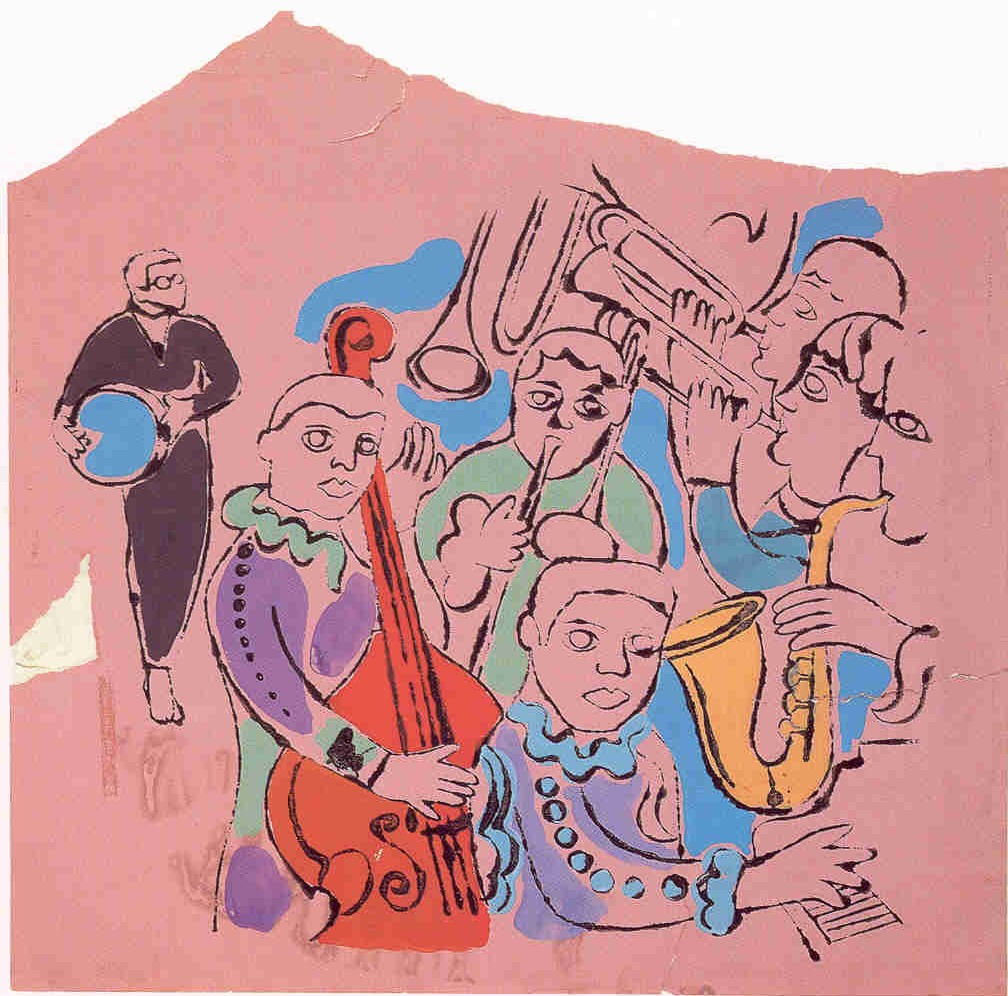
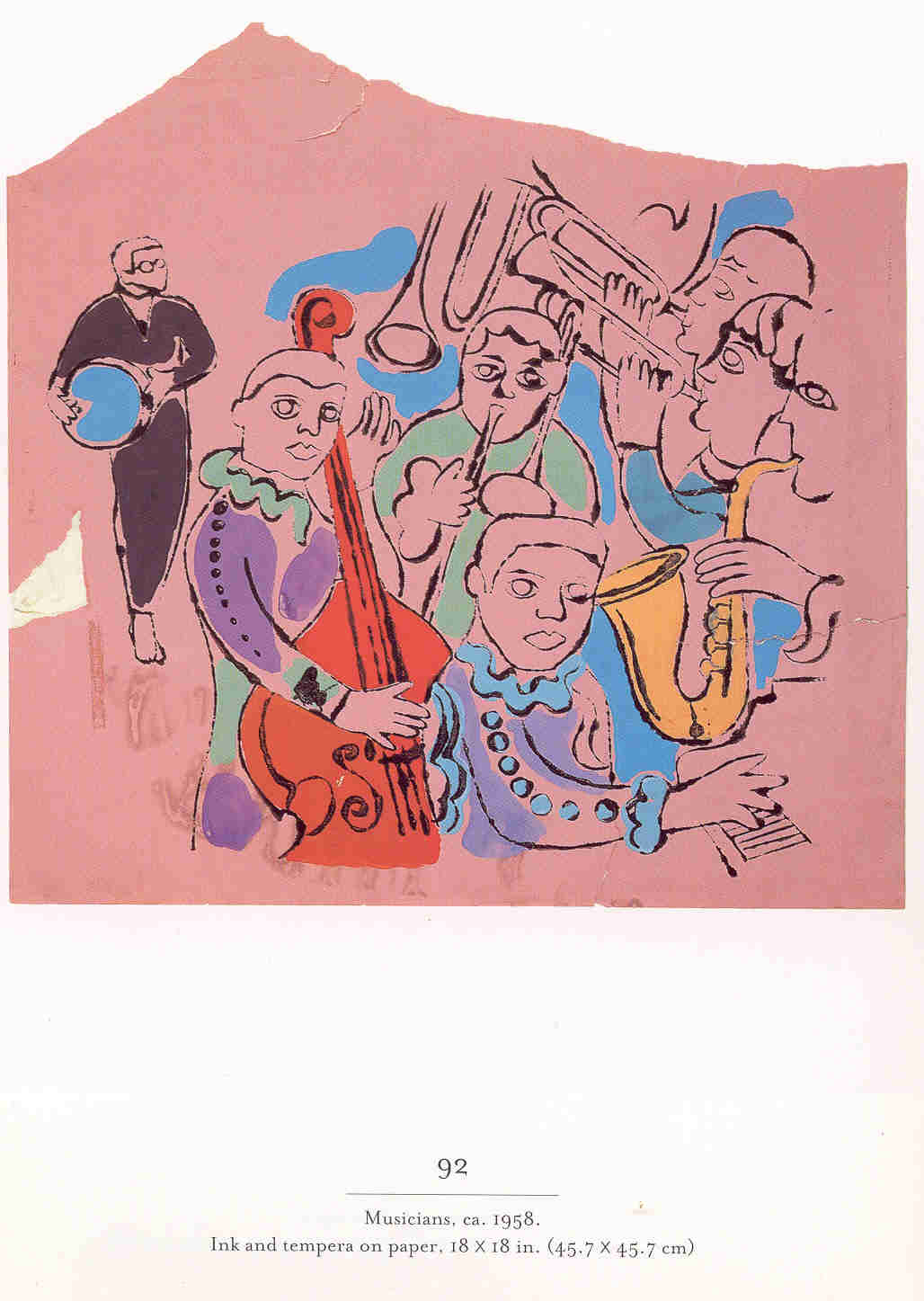
I already wrote about the second drawing related to the Al Escobar cover some years ago, in a blog post about the collaboration between Andy Warhol and designer Reid Miles for the album Trombone By Three on the Prestige label. Except that at that time I had no clue what the drawing, which I had seen in a book on Warhol’s 1950s illustrations, was made for.
It is the only other drawing I know Warhol did in the same style as the Trombone By Three cover, based on a medieval book illustration. Especially the hair and eyes of the musicians look similar. It is interesting to see how Warhol worked on two commissions for Reid Miles at the same time, one for Prestige records and one for Cadence records, while experimenting with different styles.
The drawing in the 1950s book shows a latin jazz combo in colourful, festive costumes. And also here, at the left: a man wearing glasses and dressed in black. Not just clapping hands, though, but playing (or holding) a bongo or a tambourine.


Dank u ook deze leuk om te lezen Groetjes Johan
LikeLike